

cultivating relationships
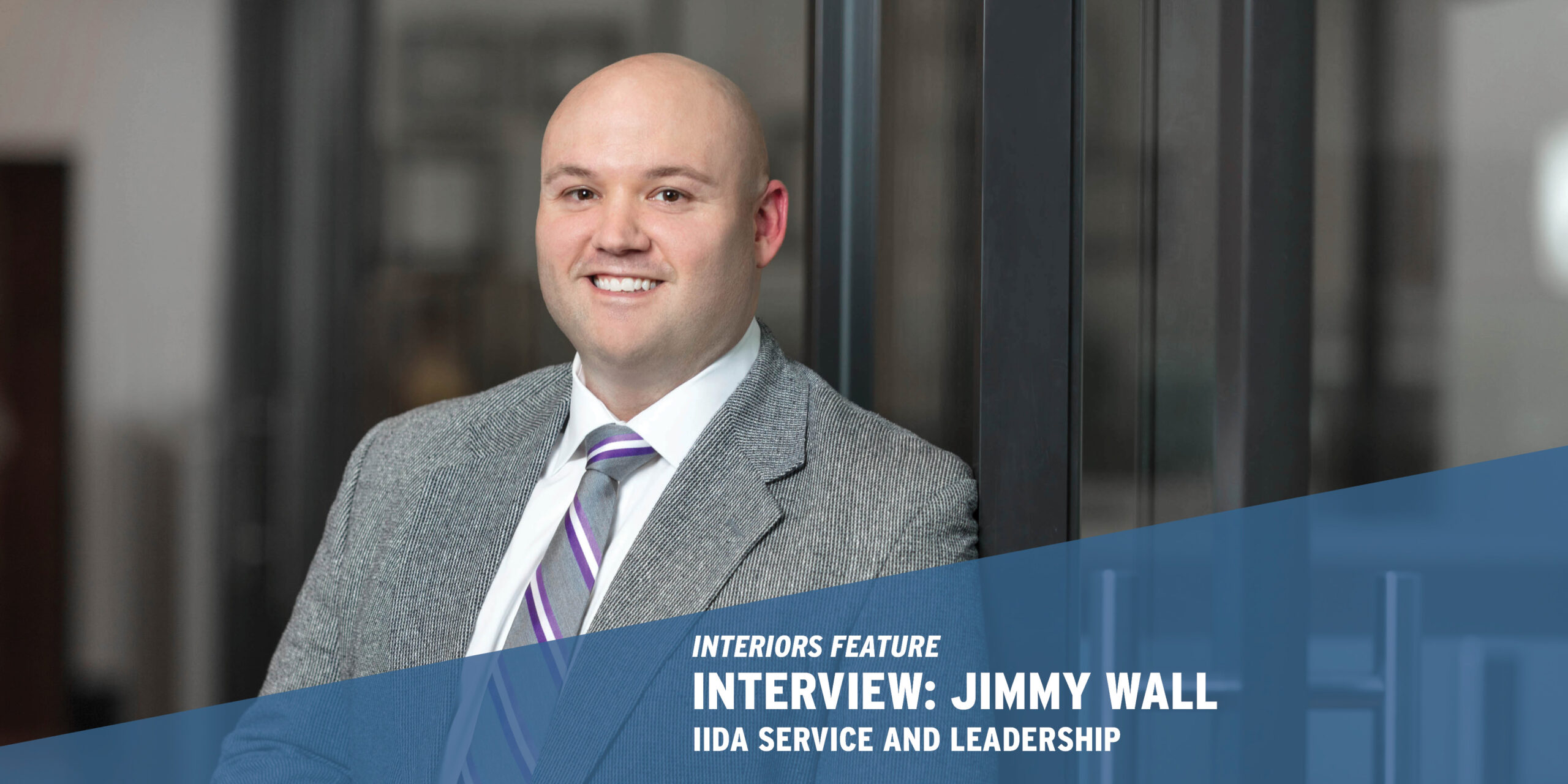
Jimmy Wall, IIDA Service: INTERVIEW
Marketing Director Rachel John: So, tell me your official title with the organization and the organization’s name.
Interior Designer Jimmy Wall, IIDA: Official organization name is the International Interior Design Association Carolinas Chapter and within that I am the– as they say– Co-City Center Director for Columbia.
RJ: I remember when that first happened you were like, “Do we really need Co’s?” You know, like, isn’t there just supposed to be– so you guys will both retire at the same time–
JW: [interjecting] Rolling. In a way, if we wanted to, we could’ve redone it, or we could’ve set it up to where it was President/President-Elect but because we both were starting at the same time, we just treated it as “Co”.
RJ: Okay, gotcha.
JW: I’m officially “Co-Director”.
RJ: So how did you move your way up in the organization?
JW: I actually joined Columbia City Center Steering Committee before I even had a job in Columbia as an Interior Designer.
RJ: Oh really?
JW: I joined when I moved here, to Columbia, and I went to a… I think it was a general membership recruitment event? I think it was at, what’s the old house? Robert Mills. It was at [the] Robert Mills House and I was talking with people and said “yeah well, I just moved here. I have a degree in Design, but I don’t work anywhere yet” [laughing] and they said, “well stay around, just hang out!” and that’s how it started. I was like “wait a minute, I could be on the Steering Committee and not even be a paying member?” and they went “yeah I mean, you have a design degree, and we always need ideas and help and everything” so, that was how it started!
And it was from that that I got my first job. [it] was– I didn’t apply to anything– it was sitting at another mixer after that sort of welcome thing, and we were at Pearlz [Oyster Bar], at the bar and one sales rep from [unintelligible] was sitting on one side and my future coworker was sitting on the other side, and she just leaned in front of me and says “Hey Beth, aren’t you guys hiring?”
RJ: Oh wow. So, the IIDA Organization. What’s the benefit of joining?
JW: The biggest in my mind is professional advocacy. So, right now, interior design is one of the few building professions that’s unprotected universally across every state and every municipality. So, you know, [how] you have to be licensed to be an architect. That is not necessarily the case in every state. It’s sort of, it’s up to every state to decide how they want to treat the profession. A lot of that has historic roots in decorating, but as commercial design has become so much more prominent– particularly, you know, these shell environments and buildings– the need for expertise in interior design has grown out of that. But this sort of– if you will– the legislation in terms of protecting the profession has not grown in step with that. So, that’s, in my mind, the biggest benefit.
The other is networking and just knowledge sharing. In fact, we are, starting next week, a new program in Columbia. Columbia only is gonna be a pilot for– so every– there’s several city centers throughout the Carolinas Chapter, and we have been given the greenlight to pilot a program that we’re calling “Espresso Yourself” and it is going to be, well, I was gonna say monthly, but we haven’t set the tempo yet. We don’t know how often we’ll meet, but it will be specifically for, or geared towards the professional membership to come together and discuss whatever idea we want to discuss. But it is specifically not– a lot of our events are sponsored by other sales reps or, you know, corporations. This is going to be a free event for members. No sponsorship, it is purely us gathering to, almost [unintelligible] What is it? Knights of the Round Table. Like it is just: gather around, talk about this issue that we have.
Our first one is going to be on art, and specifically how people have found ways to integrate art into their projects. Specifically, rather large-scale. So, in [the Cathy Novinger] Girl Scouts [Leadership Center] we had Bob Doster (?) involved in a lot of that but that was something where, to my understanding at least, the client brought him to the table.
RJ: Right
JW: But out of that, the thought was “well how do we try to get art of that scale and caliber in more of our projects?”. Because art has such a big community-building, placemaking component to it, especially you know, Columbia has its mural program– there’s great murals all over– but those are on the outsides of buildings and those are done [in] different sort of strategic areas where the artist is brought in. Well, how do we do that? How do we convince our client that they need to do this? And that’s also from my time at the GSA because they have their Art and Architecture program, which is I believe it’s 1% of every capital expense project has to go towards public art to some degree.
So that was the other side of it. So anyway, we’re gonna get together and talk about art. How do people… where do they source it? How do they convince their clients it’s worthwhile? Because it is a worthwhile expense but a lot of times, they just see it as you know, something– I don’t wanna say frivolous but– you know, something easy to cut when it’s time.
RJ: But Espresso Yourself is a program that you’ll do where there is a dedicated topic. And then– Is there a, like a roundtable leader or something for each one?
JW: So, our pilot will be next week, and we will determine that then! [laughing]
RJ: Yeah. Yeah, that’ll be interesting.
JW: So, I have a feeling that it will… So, I’m rolling off as Co-Director. I have a feeling that because I’ve been the one championing it, I’m going to be the one continuing to champion this Espresso Yourself program. So, it still would be officially an IIDA program, but it would still operate sort of outside of the regular calendar of events but will need someone’s dedicated time and focus.
RJ: That’s really interesting because with these Chapters, you know, you’re kind of relying on what other Chapters are doing but you also want it to be customized to here. Then you have to rely on your own resources and kind of cater it to your own audience as well.
JW: Exactly.
RJ: How many members are there in IIDA Carolinas right now?
JW: I’ll have to get back to you on that.
RJ: Totally fine. You have come from a number of organizations where you volunteer your time, so I know you’re no stranger to the ins and outs of bylaws and innerworkings and treasury and all that other stuff. How did that work with IIDA? What’s your board setup like?
JW: Interesting. It’s… very top down. So, because we are the chapter and each City Center is almost the satellite office, we don’t hold our own money.
RJ: Oh!
JW: So, the Chapter does. At the City Center we actually don’t… I mean, we touch money in terms of if we have an event and say BOUDREAUX wants to sponsor it and we have a sponsorship tier or whatever, we would take that money, but then we would give it to the Chapter itself. Like that’s how– after we pay for the project itself. So, it’s this weird sort of in-between thing.
It’s almost like each… what you would normally call a Chapter is almost like a subcommittee.
RJ: Oh interesting, okay.
JW: In a way. Now that I’m talking about it, in a way that’s what it is because each City Center is almost like a City Center Subcommittee where they’re in charge of their own programming and things, but they still answer to the greater Chapter.
RJ: Did they give you any sort of training for your leadership role?
JW: Yes! So, every year we have a Summer called the Board Retreat and for the past few years it’s been at Milliken’s Headquarters—they’re a carpet manufacturer here in the Upstate, in Spartanburg. And they have a wonderful campus. Beautiful little… not cabanas… but bungalows and they have their own corporate chef and they… So, Milliken treats us well, we don’t have to think about anything except focusing on the year ahead and all the training that goes with it.
RJ: That’s amazing! I guess when I said, “how many members do you have?”, I guess I would need two numbers: the Chapter and then Columbia section of it.
JW: Exactly. And I would say a good number, a good turnout for us would be 20. For our local events. That would be a solid… Our steering committee is about 10 people on paper, but we have such a big steering committee knowing that not everyone always has time to dedicate to coming to things. So at least we have, if we have enough people to pull from, then we have enough input to feel confident about the programming we’re putting on.
RJ: That’s a really interesting number that in Columbia there’s maybe what, 20? 25? People that are NCIDQ? Or that’s not a requirement? You can be in the IIDA…
JW: [interjecting] Not a requirement yeah, so they have different levels of membership. The professional membership is the one that comes with NCIDQ certification. They have the Professional Associate is for someone who is practicing design but has not passed the NCIDQ and then Industry which is any sort of manufacture sales reps or any sort of adjacent type of thing-industry. They can join so that they are pledging their… not allegiance… Support! Yeah. They’re supporting the organization, they believe in it, and to the point where you know, we’ve received a lot of support at the sponsorship level for companies that didn’t really ask for anything in return. They didn’t ask for a tax number. They did it out of supporting the design community in Columbia.
RJ: Wow that’s good to hear. What types of programs does IIDA offer?
JW: So, in terms of professional advocacy the biggest is CEU events. So, we have those twice a year, and we like to double them up around lunch time so we’ll have one before lunch and one after lunch, so that way we can say the City Center, each year we’re providing four opportunities for our members to take CEU credits—or to earn CEU credits, rather.
The other is our holiday party we do every other year alternating—and that’s at the City Center level—alternating with Design Works, the award show, as the Chapter level. So, it’s almost like one year: Chapter, big Chapter-wide event. Next year: smaller, local City Center event, then that sequence continues. This year will be a local holiday party and we’re gonna be back at Girl Scouts!
RJ: Oh, fun! Glad to hear that. What are you most proud of over your tenure as leader of this organization, this hub.
JW: Honestly if we can do this event, Espresso Yourself because it’s something I’ve talked about with other members in the past and we were told “no” we couldn’t do it because the way they organize—when I say “they” I mean the chapter—the way they structure the calendar of events, it didn’t fit into that. [They would say] “Well you can’t… this is what we do.” Almost like “this is what we do, sorry it doesn’t fit.” But when we were able to demonstrate that it would be supplemental, and it would be something that wouldn’t impact any current programming or any current budget. That basically, whenever we go to a place it is someone donating their venue, and someone donating coffee, and you know, treats or whatever, then they said, “go forth and conquer, tell us how it goes.” So that’s why we’ve been given the green light to give this a shot. And that’s, I would say, probably my biggest pride moment because it’s something… before I was even City Center director I talked about, we should just get together and talk about things. So, share ideas, knowledge share, that’s really what it is.
RJ: Why do you think you were so successful this past year along with your co-chair? I remember you kind of talked to me a little bit about how she’s kind of one side of things and you’re the other. How, you know, if you were gonna give her a pat on the back for anything like what would it be?
JW: She keeps me in line. [laughing] No, sort of. I’m more of the base if you will, and Lynn is more of the internal management and I am, you mentioned, treasury and books and things like that. She handles all the budgets for all of our events, so she is the excel maiden. She is able to handle that, so I am able to focus on being the cheerleader. So that’s the thing, and I don’t know when I heard it, but I heard at some point that the number one role of any leader is to be a cheerleader. And that is… She allows me to focus on doing that like getting people excited, getting them involved and active. Because if I were to do it all, I would be really suffering at the cheerleader part.
RJ: What would you say as any advice for someone who’s looking to enter the interior design realm? Other than joining the organization.
JW: Network. Be involved. And be persistent. Be active. I can not tell you the number of times I’ve received an email and I’m not ignoring it, I just got overwhelmed and distracted and it ends up at the bottom. Then I realize “Oh wait! It’s been however long and they haven’t followed up. Well, it must not have been that important.” If it was really important to you then be persistent. Follow up. Because its not that people are shutting you out, it’s that they have other stuff going on. But they want to help and they want to support. I’ve received emails from various individuals at USC who are interested in shadowing or just learning more about the industry in general and they were persistent, they reached out. And then, the example of networking. I didn’t fill out any applications that first time. It was sitting at a bar for a happy hour. And then similarly, when I moved on to another firm it was a similar situation, and coming here I knew Celia, there was no open position, “we’re hiring” sign. Either way I didn’t apply online. I met with her and just came in and talked.
RJ: Is there anything I haven’t asked that you were expecting me to ask?
JW: I think I was expecting you to say “How have I improved the City Center?” I think, if you were to ask people about me they would say I am most likely the opposite of what you would think an interior designer is. I think there’s a common perception they are either stuffy or very formal or very prim and proper and I am very casual– it’s the Florida in me. And I feel like I’ve brought that energy to our City Center. I feel that a lot of people feel its more approachable to come to leadership. We’ve had people who, just by being at events and talking with us, have asked how they can be more involved. We have not directly asked someone to be a part of the Steering Committee since I’ve been here. People come out and want to help out. And I feel like that speaks to my pride that I’ve made it such a welcoming environment that they know they can ask the stupid question– and its not stupid. They know they can come to me and I can help them navigate, because everyone was new at some point.
RJ: You’re in this group with a lot of your competitors. What is that like?
JW: I’m glad you asked that! that is something we have heard from other City Centers. At other City Centers, particularly the larger ones like Raleigh-Durham and Charlotte, there is a feeling of almost a weirdness at events sometimes because “you’re fraternizing with the enemy”. These are your competitors. Columbia, from a design perspective, feels like an underdog. We’re playing second fiddle to the Charleston’s, the Charlotte’s of the design world. We are happy to see our peers succeed. If one of the other firms in town wins an award, even if its an award we submitted form, you best bet I’m jumping up and applauding because I’m so happy to see Columbia recognized for something. I feel like we all have so much talent and passion here and that is why there’s none of that weird energy at any of our events, because we’re so damn happy to see design progress in Columbia. And if that means one of your competitors wins an award on a project and yours didn’t, Columbia’s name is attached to that and we’re proud of that.