
cultivating relationships
Exploring Opportunities for Rural South Carolina County Communities
Historic preservation is often viewed through the lens of architecture, history, or cultural stewardship. While those perspectives remain essential, a growing conversation is emerging across South Carolina: preservation is also an economic development strategy.
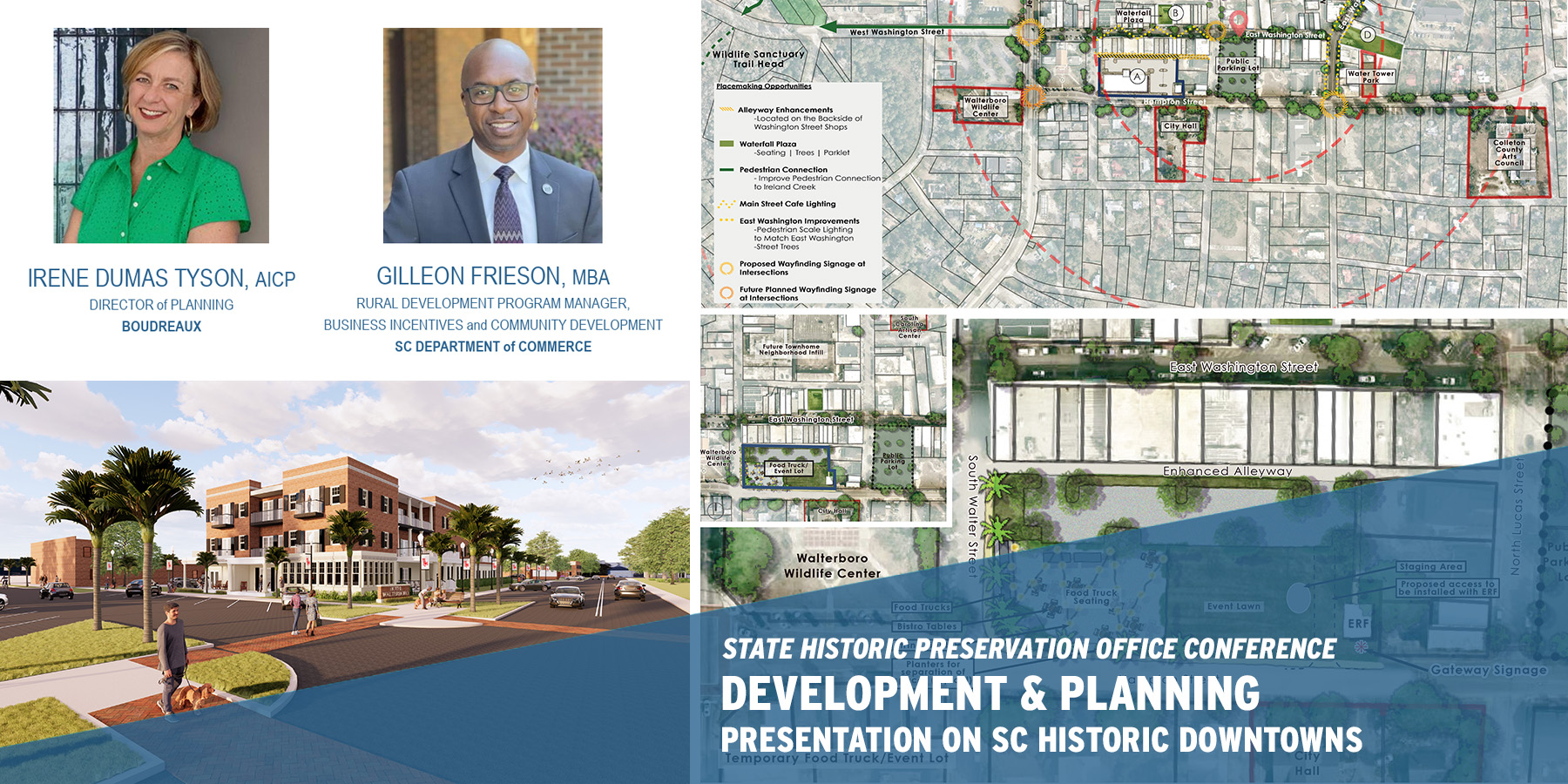
That conversation was front and center at the 2026 South Carolina Historic Preservation Conference hosted by the South Carolina State Historic Preservation Office (SHPO). The annual conference brings together preservationists, planners, architects, historians, community leaders, and local officials from across the state to explore how historic places can continue serving communities for generations to come.
This year, BOUDREAUX was honored to participate in a session alongside our partners at the South Carolina Department of Commerce. Our presentation focused on our recent rural development and strategic planning efforts in rural SC county communities. The presentation explored how communities can leverage planning, preservation, and local identity to create implementable roadmaps for growth and long-term prosperity. The initiative, launched by the Department of Commerce in 2023, was created to help rural communities address economic development challenges while improving quality of life through strategic planning efforts.
Looking Beyond Buildings
When many people think about historic preservation, they picture restoring a landmark building or protecting an architectural treasure. While those projects are important, preservation is ultimately about people and place.
Historic downtowns, main streets, mill villages, churches, schools, courthouses, and community gathering spaces tell the story of a place. They create a sense of identity that cannot be replicated through new construction alone. These historic assets often become the foundation for tourism, small business growth, housing reinvestment, and community pride.
For rural communities especially, historic resources can provide a competitive advantage. In a world where many places are beginning to look alike, authentic places stand out. Communities that understand and invest in their historic character are often better positioned to attract visitors, businesses, residents, and investment.
The question is no longer whether preservation matters. The question is how communities can strategically use preservation to achieve broader economic and community goals.
The Power of Planning
That is where planning enters the conversation.
Through our partnership with the South Carolina Department of Commerce, we have worked with communities across the state to develop strategic plans that connect preservation with economic development, recreation, housing, tourism, transportation, and quality of life initiatives.
The most successful plans begin by identifying what makes a community unique. Often, the answer lies within its historic resources. Whether it is a historic downtown district, a former industrial site, a railroad corridor, or a collection of significant community buildings, these places provide the foundation for future investment.
Planning helps communities move beyond simply preserving a building. Instead, it asks larger questions:
- How can this historic asset contribute to economic development?
- What opportunities exist for adaptive reuse?
- How can preservation support tourism and small business growth?
- How can historic places improve quality of life for residents?
- What partnerships and funding sources can help make implementation possible?
By aligning preservation goals with economic development objectives, communities can transform historic resources from liabilities into catalysts for growth.
Why This Matters Now
Across South Carolina, many rural communities are facing significant challenges. Population shifts, changing economies, aging infrastructure, and limited resources can make long-term planning difficult. At the same time, these communities often possess remarkable assets that larger cities would envy: walkable downtowns, historic architecture, cultural heritage, natural beauty, and strong community identity.
The Department of Commerce’s Rural Development & Strategic Planning Initiative recognizes that lasting economic development requires more than recruiting new industry. It requires investing in the places where people already live, work, gather, and build community. Historic preservation plays an important role in that effort because it helps communities build upon existing strengths rather than starting from scratch.
Preservation Creates Stronger Communities
One of the most rewarding aspects of preservation work is seeing how projects impact people long after construction is complete.
A restored downtown storefront becomes a new small business. A rehabilitated historic building becomes a community gathering space. A revitalized district attracts investment and renewed energy. A community that understands its story gains confidence in its future.
At BOUDREAUX, we believe preservation is not simply about saving old buildings. It is about creating meaningful places that continue serving communities for generations. That philosophy aligns closely with the mission of the South Carolina Historic Preservation Conference and the work being advanced through the Department of Commerce’s rural planning initiative. Both recognize that preservation and progress are not competing ideas. When approached thoughtfully, they are powerful partners.
As South Carolina continues to grow and evolve, the communities that thrive will be those that understand the value of their unique identity and have a plan for building upon it.
Historic preservation helps tell that story. Strategic planning helps write the next chapter.
Check out our presentation here.