

cultivating relationships
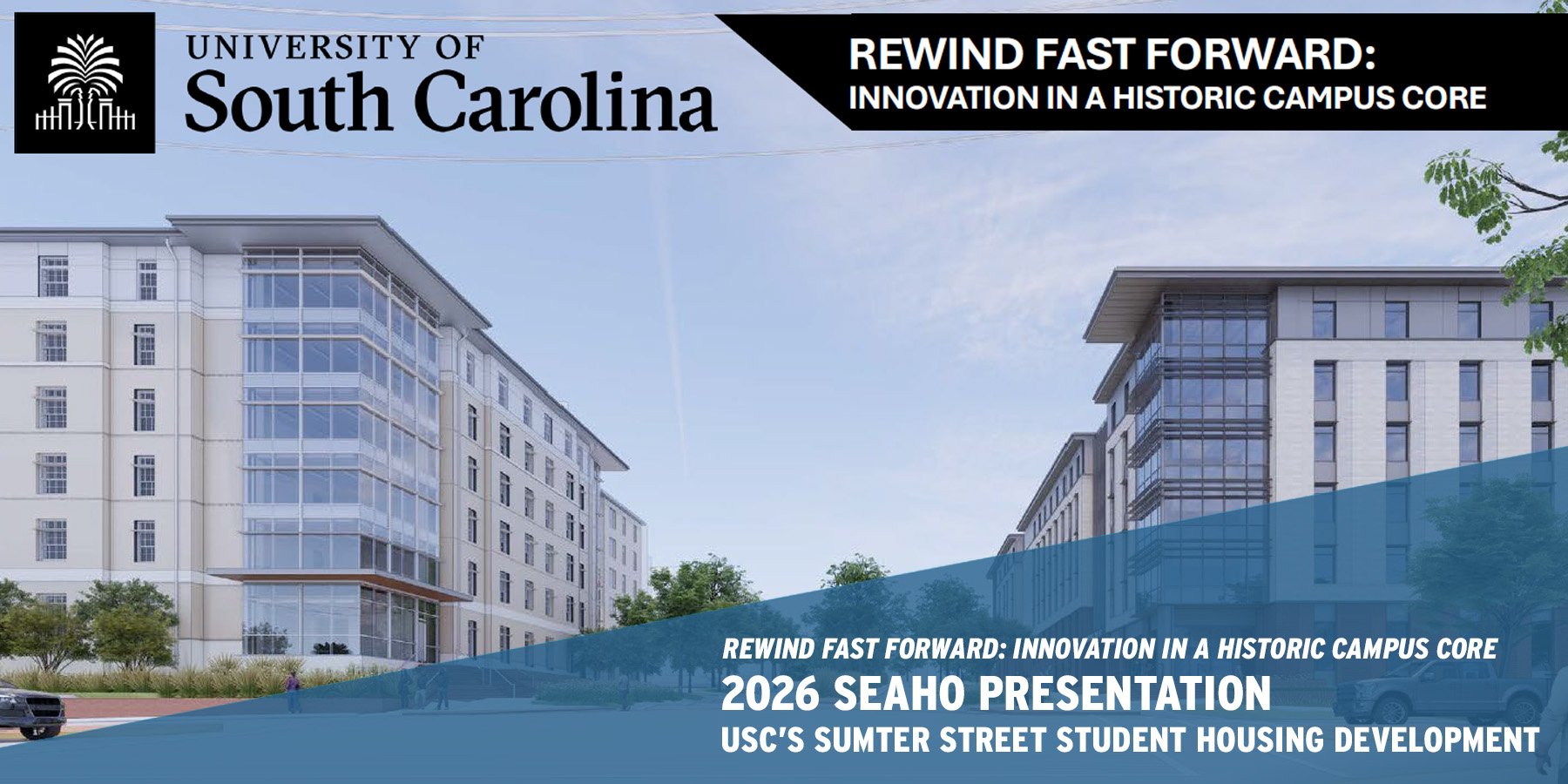
Bringing USC Sumter Street Student Housing Development to SEAHO!
Student housing is about much more than providing a bed.
The most successful residence halls create opportunities for connection, belonging, academic success, and personal growth. Yet as colleges and universities continue investing in new housing and residential life spaces, an important question remains:
What communal spaces do students actually use?
At the 2026 Southeast Association of Housing Officers (SEAHO) Conference, BOUDREAUX joined leaders from the University of South Carolina Housing, our partners at Little, and Juneau Construction Company to explore that question through an interactive presentation titled Rewind Fast-Forward: Innovation in a Historic Campus Core. The session highlighted USC’s ambitious Sumter Street Residences project while inviting housing professionals from across the Southeast to become part of the design process.
Rather than presenting a finished solution, we asked attendees to help shape one.
Designing in the Heart of Campus
The presentation centered on the University of South Carolina’s new Sumter Street Residences development, a transformational housing project designed to bring more than 1,000 beds into the historic core of campus while creating a new residential hub for students. The project presents a unique challenge: how do you maximize capacity, maintain affordability, respect historic campus character, and create meaningful student experiences – all on one of the most constrained sites on campus?
Those questions led to a broader conversation about what students need from residential communities today. For decades, residence halls focused primarily on sleeping, studying, and dining. Today’s students expect more. They seek spaces that support collaboration, wellness, community building, identity formation, and flexible learning opportunities. The challenge for designers and housing professionals is determining which investments create the greatest impact.
Turning a Conference Session into a Design Workshop
Instead of ending our presentation with renderings and floor plans, we transformed the room into a working design charrette.
Attendees broke into small groups and evaluated three communal spaces currently being developed within the Sumter Street Residences project:
- A flexible multipurpose gathering space
- A rooftop amenity and event area
- Business hub and classroom spaces
Housing officers were asked a simple question: If these spaces existed on your campus, how would students use them?
The conversation quickly became one of the most valuable parts of the session. Participants shared examples from their own institutions—spaces that exceeded expectations, spaces that struggled to find an audience, and programming ideas that transformed underutilized rooms into campus destinations. The discussion reinforced an important truth: the success of a space is rarely determined by square footage alone. Successful communal spaces are adaptable, intentional, and connected to the culture of the institution.
Why Collaboration Matters
Another key theme of the presentation was the importance of collaboration. The Sumter Street Residences project involves housing leadership, student affairs professionals, facilities staff, campus planners, city officials, architects, contractors, and students themselves. Each stakeholder brings a different perspective to the conversation.
The interactive SEAHO session expanded that stakeholder group even further. By inviting housing professionals from across the region into the design process, the project team gained insights from institutions facing similar challenges related to enrollment growth, student expectations, affordability, and campus identity. Some of the most valuable ideas came from lessons learned elsewhere – what worked, what didn’t, and what participants wished they had done differently.
Why This Conversation Matters
Across the Southeast, universities are investing heavily in student housing. Many institutions are replacing aging residence halls, increasing bed capacity, and creating new residential communities designed around student engagement and success.
As these investments continue, the conversation must extend beyond buildings.
The real measure of success is not the number of beds created or the square footage delivered. Success is measured by the student experience that follows.
At BOUDREAUX, we believe the best design solutions emerge through collaboration. Sometimes that means engaging students. Sometimes it means working alongside housing leaders. And sometimes it means turning a conference presentation into a design workshop and learning from colleagues across the Southeast.
The most successful communities are built together – and so are the places that support them.
Check out our full presentation here: